Why 99% of Denied Claims Never Get Appealed (And How AI Changes Everything)
Why 99% of Denied Claims Never Get Appealed (And How AI Changes Everything)

Here's a statistic that should make your blood boil: Less than 1% of denied insurance claims are ever appealed, even though 44-80% of appeals that are filed actually succeed.
Let that sink in for a moment. Insurance companies are rejecting nearly 1 in 5 in-network claims and over one-third of out-of-network claims, yet 99% of Americans who get denied simply accept it and move on. Meanwhile, those brave enough to fight back win more often than not.
This isn't just a healthcare problem: it's a massive wealth transfer from sick Americans to insurance company shareholders, enabled by a system so deliberately complex that most people give up before they even start.
The Shocking Reality of Insurance Denials
The numbers paint a disturbing picture. In 2023, HealthCare.gov insurers denied nearly 20% of all in-network claims and 37% of out-of-network claims. Across different insurance programs, denial rates hover consistently around 15-17%:
- Medicare Advantage: 17% denial rate
- Medicaid: 16.7% denial rate
- Private insurance: 15% denial rate
- Managed Medicaid: 15.1% denial rate
But here's where it gets really crazy: when patients actually appeal these denials, they succeed at shocking rates:
- 44% of internal appeals successfully overturn the original denial
- 57% of Medicare Advantage appeals are overturned
- 60-80% of denials are ultimately overturned in certain states when patients persist through the full process

The math is simple: if you're one of the few people who actually fights back, you'll probably win. So why doesn't anyone fight?
The Perfect Storm That Keeps Patients Silent
The "Other" Problem
The most common reason for claim denials? A vague category called "Other" that accounts for 34% of all rejections. This catch-all gives insurers maximum flexibility while providing patients with zero useful information about what actually went wrong.
When your claim gets denied for "Other," what exactly are you supposed to appeal? It's like getting a failing grade with no explanation: designed to discourage further questions.
Administrative Quicksand
The appeals process isn't just complex: it's deliberately designed to exhaust you. Each appeal requires:
- Specific forms filled out perfectly
- Medical records gathered and submitted
- Strict deadlines that vary by insurer
- Phone calls that put you on hold for hours
- Follow-up documentation that's often requested at the last minute
For healthcare providers, the burden is equally crushing. Each denied claim costs medical practices approximately $43 to process, and small practices spend more than 12 hours every week just fighting with insurance companies. That adds up to $19 billion in annual administrative waste: money that could be spent on actual healthcare.
The Exhaustion Factor
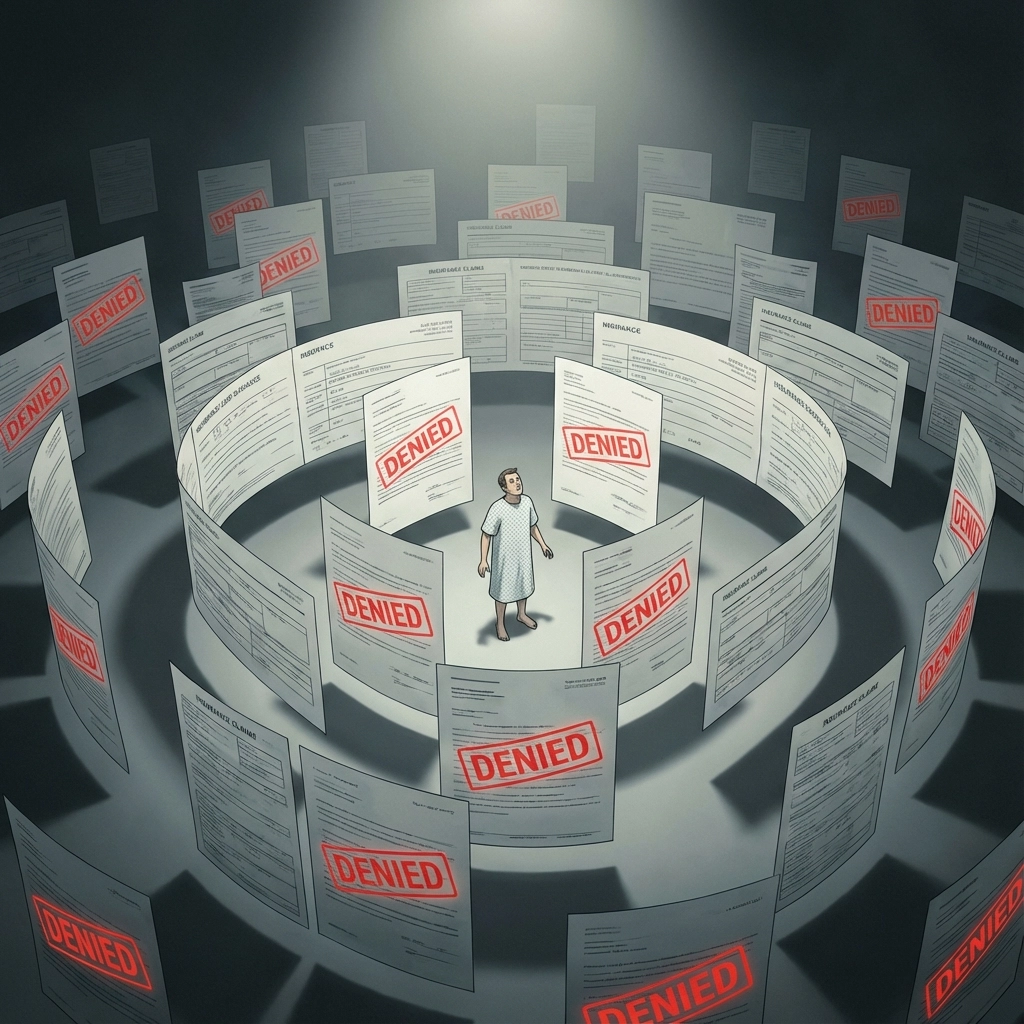
Here's what insurance companies count on: you're already sick, stressed, and financially strained. The last thing you want to do is wage a bureaucratic war against a billion-dollar corporation with teams of lawyers and professional claim deniers.
They're betting that you'll pay the bill yourself rather than spend weeks navigating their deliberately confusing appeals maze. And 99% of the time, they're right.
The Hidden Cost of Giving Up
When patients don't appeal wrongful denials, everyone loses except the insurance companies:
Patients pay thousands out-of-pocket for treatments that should have been covered, sometimes going into debt or skipping necessary care entirely.
Healthcare providers write off billions in unpaid claims, costs that ultimately get passed on to other patients through higher prices.
The healthcare system becomes more expensive for everyone as administrative costs spiral and providers shift focus from patient care to insurance battles.
Innovation stagnates because the current system rewards insurance companies for finding new ways to deny valid claims rather than improving patient outcomes.
How AI Is About to Flip the Script
Artificial intelligence is finally giving patients the weapons they need to fight back effectively. Here's how the technology is transforming the appeals battlefield:
Instant Denial Analysis
AI can now read denial letters in seconds and identify exactly which regulations, medical codes, or coverage rules the insurer violated. Instead of spending hours trying to decode insurance jargon, patients get plain-English explanations of why their denial was wrong and exactly what evidence they need to overturn it.
Automated Appeals Generation
The most sophisticated AI systems can draft entire appeals letters complete with relevant medical literature, insurance policy citations, and regulatory references. What used to take lawyers hours now happens in minutes, with success rates that often exceed traditional appeals.
Pattern Recognition at Scale
AI can identify when insurance companies are systematically denying certain types of claims inappropriately. By analyzing thousands of denials across multiple insurers, AI spots patterns that would be impossible for individual patients to detect: like seasonal spikes in denial rates or suspicious rejection patterns for expensive medications.

Real-Time Strategy Optimization
Machine learning algorithms analyze which appeal strategies work best for specific insurers, claim types, and denial reasons. This means every patient benefits from the collective success of everyone who came before them, dramatically improving win rates across the board.
24/7 Support and Persistence
Unlike human advocates who need sleep and have limited availability, AI systems can monitor deadlines, send follow-up requests, and escalate cases automatically. They never get tired, never miss a deadline, and never give up.
The Coming Revolution
We're standing at the edge of a fundamental power shift in healthcare. For decades, insurance companies have relied on complexity and exhaustion to avoid paying legitimate claims. But AI is about to make appeals so easy and effective that their denial-first business model becomes unsustainable.
Imagine a world where:
- Every denial gets appealed automatically within 24 hours of being issued
- Success rates approach 80% because AI identifies the strongest possible arguments
- Insurance companies think twice before denying claims they know will be successfully challenged
- Healthcare costs drop as insurers return to their proper role of paying valid claims instead of finding creative ways to avoid them
This isn't science fiction: it's happening right now. Early AI-powered appeal platforms are already reporting success rates above 70%, and the technology is improving rapidly.
Taking Action Today
While we wait for AI to fully transform the system, you don't have to accept wrongful denials. The research shows that patients who appeal have an excellent chance of winning, especially when they persist through external review processes.
If you've received a denial that seems questionable, consider these steps:
- Don't accept vague explanations like "Other" or "not medically necessary" without demanding specific justification
- Know your deadlines for internal and external appeals: they're usually 60-180 days depending on your plan
- Gather supporting documentation from your healthcare providers early in the process
- Consider AI-powered tools that can help you craft stronger appeals with higher success rates
The current system thrives on patient ignorance and exhaustion, but knowledge and persistence can beat it. And soon, AI will make that fight easier for everyone.
The 99% who give up today won't have to tomorrow. The future of healthcare appeals is automated, intelligent, and designed to work for patients instead of against them. Insurance companies have had their fun denying legitimate claims with impunity, but that party is about to end.
Ready to learn more about how AI can help you fight back against wrongful denials? Explore our AI helper tools and discover the strategies that are already helping thousands of patients win their appeals.
Share this article
Fighting an insurance denial?
Our AI-powered appeal generator helps you write professional, evidence-backed appeal letters in minutes.